

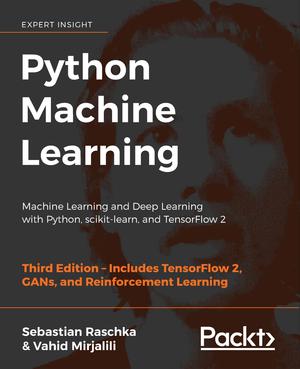
Result: Python Machine Learning Ed. 3
copyrighted
https://univ.scholarvox.com/book/88877968
https://static2.cyberlibris.com/books_upload/136pix/9781789958294.jpg
1268662669
From OAIster®, provided by the OCLC Cooperative.
Further information
Applied machine learning with a solid foundation in theory. Revised and expanded for TensorFlow 2, GANs, and reinforcement learning. Key Features Third edition of the bestselling, widely acclaimed Python machine learning book Clear and intuitive explanations take you deep into the theory and practice of Python machine learning Fully updated and expanded to cover TensorFlow 2, Generative Adversarial Network models, reinforcement learning, and best practices Book Description Python Machine Learning, Third Edition is a comprehensive guide to machine learning and deep learning with Python. It acts as both a step-by-step tutorial, and a reference you'll keep coming back to as you build your machine learning systems. Packed with clear explanations, visualizations, and working examples, the book covers all the essential machine learning techniques in depth. While some books teach you only to follow instructions, with this machine learning book, Raschka and Mirjalili teach the principles behind machine learning, allowing you to build models and applications for yourself. Updated for TensorFlow 2.0, this new third edition introduces readers to its new Keras API features, as well as the latest additions to scikit-learn. It's also expanded to cover cutting-edge reinforcement learning techniques based on deep learning, as well as an introduction to GANs. Finally, this book also explores a subfield of natural language processing (NLP) called sentiment analysis, helping you learn how to use machine learning algorithms to classify documents. This book is your companion to machine learning with Python, whether you're a Python developer new to machine learning or want to deepen your knowledge of the latest developments. What you will learn Master the frameworks, models, and techniques that enable machines to 'learn' from data Use scikit-learn for machine learning and TensorFlow for deep learning Apply machine learning to image classification, sentiment analysis, intelligent web appl